Tuesday, July 5, 2011

Why we need an Applied Anthropology


We live in a world which we know only as The World


.

click on the links below to learn more

It is a Beautiful World.


We share this World with millions of others people.

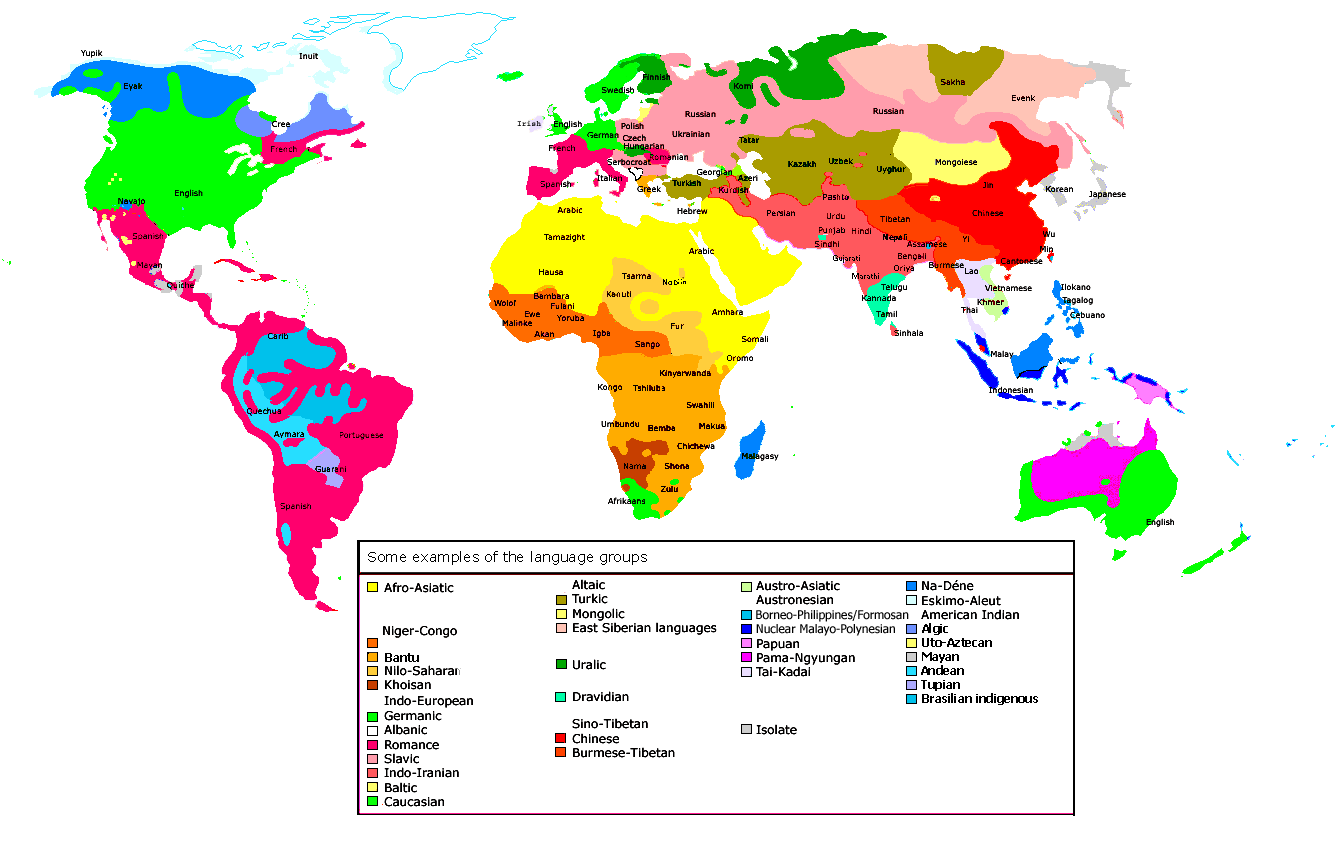
It is a complex world divided among people who speak many different languages.
 

It is a world shared people with many different culures.


It is a world of different faiths.

It is a world of uneven distribution of wealth and poverty. 

It is a world of perpetual conflict.


It is a dynamic world of perpetual change.

It is a fragile world that we almost destroyed at will during the post WWII Cold War

It is still happening. Do we want it to happen? 

OR


How can we prevent this from happening???


We need to understand one another, our differences and our similarities. We need to be open minded and accepting if we are to survive as a species. 

Applied Anthropology, the application of scientific knowledge about how our species has survived and prospered, is a starting point to framing the real questions facing our species in this century.


Saturday, July 2, 2011

The American Anthropological Association and Anthropological ethics?


Yesterday I opened my email and found the message about the American Anthropological Association's Final Draft Report of the Ethics Task Force. Having just finished a paper on Applied Ethics: Anthropology and Business I rushed to the site to see what was there. I managed to make note of this latest attempt to clarify the AAA's position and hopefully my editor will catch it. However, what I find most perplexing is that the AAA is playing the part of Lucy and I feel like Charlie Brown when it comes to trying to kick the ball

The American Anthropological Association has once again decided to look at "professional" ethics. This time it is a Draft Report from the Ethics Task Force which was released on June 30, 2011. While I know what a challenge this task is, I served from 1983 to 1986 on such a committee for the AAA and NAPA, it seems strange that only last February the AAA published a "new" revised and approved Code of Ethics.  What is going on here???
   
I want to commend the Task Force on its efforts.  I can empathize with the challenge they have been and will face going forward. However, my initial response and primary concern is that while the principles expounded here are an improvement over the 1970 Code and its offspring (1984, 1999, 2009, and the February 2011) they still miss the point. 

The topic headers make for a good start at a set of principles — stating what anthropology and the AAA stand for. However, since the AAA will not enforce the code and the COPE (Committee on Professional Ethics)' 2009 Annual Report has essential state as much, I wonder if the AAA has a need for a “Code.” .

In my experience, as an applied/practitioner, the value of a code of ethics is one of protection for the profession — protections against clients who would ask me to use my skills in an unethical way to further their objective; protection against colleagues competing against me by using unethical, inappropriate, or unprofessional practices; protection for the client and the public against the lack of a standard, reliable and valid way of knowing what is “anthropology” and who is qualified to practice as an anthropologist.
For more than a half century, the anthropological profession — as represented by the AAA — has seen ethics as being all about ME (the individual) — What can I do? What must I do? What can I get away with? 

I find that this ego-centric attitude (or should I say “anthropocentric”) fails to recognize that the AAA is a social institution which exists in a real world of human beings and social institutions who could care less about our personal fears, doubts, and biases. To the degree that they care, they want to be assured that there is some institution that will stand behind its members and guarantees the ethical quality of product it purports to represent .They are looking to the institution for quality control guidelines to reduce their risk of employing an unqualified member.

This is what a Code implies. It is a place to go to find the guarantee and to have that guarantee honored. It implies that the subject, the student, the colleague, the sponsor, and the client have recourse through the institution in the event of malpractice. Otherwise, the court system becomes the default.

If we drop the idea of a Code and simply follow the lead of the SfAA (Society for Applied Anthropology) that these will only be the principles that we expect members to follow, then we would be more honest in our presentation to the members and the public. 

The Principles can be stated in a 10 Commandment format without details and qualifications. " Thou shall or shall not." Since the AAA is not going to enforce them, there is little need to go into detail — that only invites more detail and a theological debate that goes nowhere. As principles, they are goals to aspire to and enforcement can done through rewarding outstanding examples of upholding the principles, rather than the time consuming and costly due process of punishment.
.
The AAA is NOT a professional society. Since the 1984 reorganization, it has become a consortium of clubs and voluntary associations. Unlike such professional association as the Bar Association, Medical Society, or American Institute of Certified Public Accountants, membership is voluntary and not required to practice the discipline in any of its manifestations (basic research, teaching, or practice) nor in any of the venues where anthropologists sell their service and making a living.

I feel that the Task Force should broaden the scope of its effort to consider the basic question — who and what is, or to be, served by an AAA code of ethics? 

Again, I want to commend the Task Force for it work. It is trying, challenging, and thankless job

Saturday, June 11, 2011

Applied Ethics -- Professional ethics for the Special Government Employee

Anthropologists have been arguing professional ethics since Boas published his letter to the Nation magazine on December 20, 1919, under the heading "Scientists as Spies,"  Some times this debate has been heated and other times quite ineffective. This is due in part because in their disagreements about what an anthropological ethic should be, they have been and continue to agree that whatever it is, it will be nonenforceable by the profession. But these principles might be enforced elsewhere. Why is that?  Because professional ethics are not absolutes, they are situational and relative. They are ethical systems developed to deal with the specific situations, rights and responsibilities that an individual acquires by virtue of his/her profession or job. This is what is called Applied Ethics.

Applied ethics is the branch of ethics that examines questions of moral right and wrong arising in specific areas of practical concern, as, for example, in medicine or business. So even if the AAA or SfAA or other professional  organization you belong to has an ethics code, you may find that you are covered by another applied ethics code because of a position, even if only temporarily.

During my career I have served as a reviewer of federal grant proposal as such I have been classified as a Special Government Employee and became subject to the specific applied ethics associated with that status.

 If you have the opportunity to serve such a role, check out the following video and learn what the ethical rules are to be a Special Government Employee.


Wednesday, May 4, 2011

Anthropological Ethics -- Privacy in a Social networked World

Today the American Anthropological Association has revised its ethics code.

One of the key issues is "privacy." and informed concept. While this is an important issue for academic researcher, how does it relate to the applied business anthropologist hired by a private business or by the government regulatory agency overseeing the industry in which that the private business operates?

Here is an example of how modern technology and data mining are changing the landscape of "privacy" and the practical application of informed consent.


Wall Street traders mine tweets to gain a trading edge

What are you thoughts?

Should this be a topic for academic basic research - the practice of data mining and how business ethics addresses the issue.

How does it fit with the AAA's position on IRBs and the Common Rule?

Wednesday, March 23, 2011

The Superorganic World of Transfer Pricing

Business anthropology is an emerging sub-discipline in anthropology. As an academic discipline, business anthropologists study business practices and organizations from a cultural and cross cultural perspective. As an applied discipline, the Business anthropologist works with business owners and corporations to solve cultural and cross cultural problems that arise in the course of international business and/or working with a socially and culturally diverse workforce, market place and business environment.

One problem unique to the international business corporation is the impact of "transfer pricing" on the corporation's organizational structure and operational processes. This is a concept that the business anthropologist should become familiar with when working with international\global corporation.

Transfer Pricing is an accounting tool used in international business to account for sales between a parent company and its subsidiaries located in a different tax jurisdiction. Transfer pricing deals with the problem companies face when they have operations in several different taxing jurisdictions and engage in intra-company sales of goods and services. It can also be a tool that can be used to maximize corporate income taxes savings.

A recent NPR interview on Fresh Air with reporter Jesse Drucker, from Bloomberg News, describes how this tool is being used by such global corporations as Google,Forest Laboratories and other companies to save billions of dollars of taxes.

Monday, March 14, 2011

What every applied anthropologist should learn about money!

In a recent question posed in the Systems Thinking World interest group on LinkedIn, I was struck by what I consider to be an area missing in the standard training of an applied anthropologist. This training gap applies specifically to a problem such quoted below.

On the surface this might be taken to a simple cross-cultural problem in a business context.The question is:
What should you do if you meet this situation when you are in a foreign-owned enterprise: A foreign home company set up a new brand company in China five years ago! However, till now, the Chinese brand company size was still same as before. Compared with the other similar company, this Chinese brand company never grew up. The profit that they earned has to submmit to the foreign home company by a kind of form call technical support cost.

My first questions to the reader are:
How would you attempt to address this question?
Is this a matter of cross cultural mis-communication?
Is it an example of foreign exploitation or even racism?
and, What theory or tools would you be using to assess the problem?

As I first read it. I thought about these questions and how I might have attempted to address one or the other. Maybe both. But then I paused and remembered my MBA training, especially accounting. In the world of business, accounting is the lingua franc. If you go to the site you can read my answer. Here is where the answer lay - it is a linguistic problem.

In this particular case, we have a common situation found in international business where a profit can be quickly transformed into an expense and even a loss for tax purposes. The situation is called, "transfer pricing" and is a little magical trick of removing a profit on the balance sheet and transferring it to a liability on the Income statement.

What I want to stress here is that every applied anthropologist should take a basic course in financial accounting, not to become an accountant, but to learn the language of money. Especially, the grammar of money and when to bring in an interpreter.

I am not attempting to justify exploitation such as described in the original question. What I am criticizing is that so much of the ideological criticism by anthropologists directed toward corporations and international businesses, attacking capitalism vs labor, etc. is based on the critic's linguistic ignorance of the language spoken by those they criticize. Traditional ethnography would require that the ethnographer have a basic understanding of the native language before attempting to interpret the alien culture.

What I am proposing is that any applied anthropologist who expects to influence a client who works in the real world should be familiar enough with the language of money to know when it is time to call in an accountant.

Friday, March 4, 2011

Is Applied Anthropology a Profession?

My question is based on my dissertation and subsequent career path as well as monitoring of the anthropological profession for the past 30 years. My dissertation began as a study of voluntary associations as particular type of socio-cultural adaptation to the pressure for change in a complex society - sort of a "superorganic" adaptation. The final product entitled, Anthropology and the Social Engineer: A Case Study of the Professionalization and Elaboration of the Social Scientist's Role, drew upon the research done by sociologist and anthropologists who studied modern professions such as medicine, accounting, engineering for a theoretical framework. They define a profession as a subset of an occupation. My own field work in the areas of social program design and evaluation and research into the organizational development of American anthropology confirmed the idea that a professional organization is a special case of the voluntary association form of social organization.

One of the major findings of this research is that a professional tends to express the very sense of "calling" and "commitment" to the ideology of the discipline they pursue that people report in their religious experience. These professions call upon members to subordination of their individual bias to a set of the collective standards established by discipline (faith) and to maintain a special relationship to the lay public being served. This is similar to what one finds in the clergy.

Just as the Church's greatest weapon against the apostate is "excommunication," so too the greatest weapon against a professional is the threat of ostracism, e.g. a lawyer being disbarred or a doctor having his/her medical license pulled. This is usually caused by an extreme breach of professional ethics or standards.

My question is to ascertain how others think and feel about the following situation.

If the AAA, SfAA, or NAPA have codes of ethics but no authority to enforce them and no formal requirements for membership other than paying dues, then are they a profession or simply a voluntary association?


My observation over the past 30 years is that the profession seems to rest solely and exclusively in the academy. Specifically it rests in the university department which can "license" practitioners with tenure and expel members by rescinding tenure. But where else is there a similar professional control over the practice of anthropology?

A truly professional "applied anthropology" or "practicing anthropology" would model itself after the other service professions such as medical, law,social work,engineering, etc. These professions are organized to insure a form of self government to protect members from government interference in their practice, and protect the public they serve from quacks and unethical practitioners by controlling membership.